node 04 · work · design
This Is How You Do It
Infiltration (Level 1) | Escape (Level 2) | Extraction (Level 3)
briefing
- role
- Level design: theme, story, cadence, level arrangement
- team
- Solo
- time
- 1 week
- year
- 2026
About the project
I made 3 levels in Mega Man Maker in a week, all on one theme: infiltration, escape, extraction.
"This Is How You Do It" is a level design assignment I did during my Overseas Immersion Programme at DigiPen Bilbao, in July 2026 (year 2, trimester 3, the Level Design module). The brief was to make use of whatever we had learnt and build a series of 3 levels in Mega Man Maker, each with at least 8 rooms and its own cadence, explain our intention, then record ourselves playing through them. It was a solo assignment and took me a week. Everything except the art assets and the music is mine: the theme, the story behind it, the cadence, and the arrangement of the levels.
I followed one theme across the three levels: infiltration, escape, extraction. Infiltration foreshadows escape, and the same firewall is brought forward from escape into extraction, to simulate the place going up in flames after we destroy the mad scientist's machine.
Infiltration (Level 1)
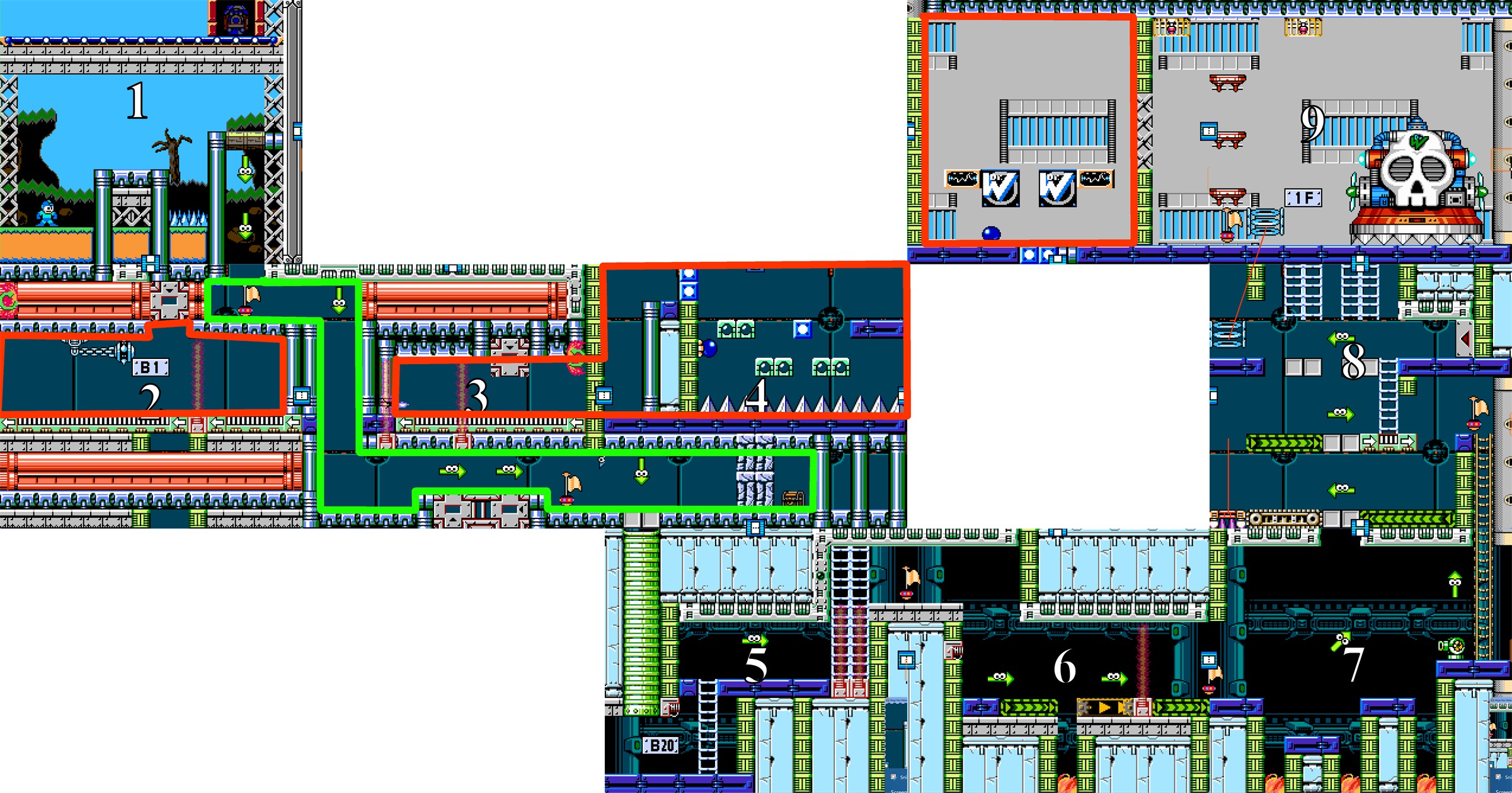
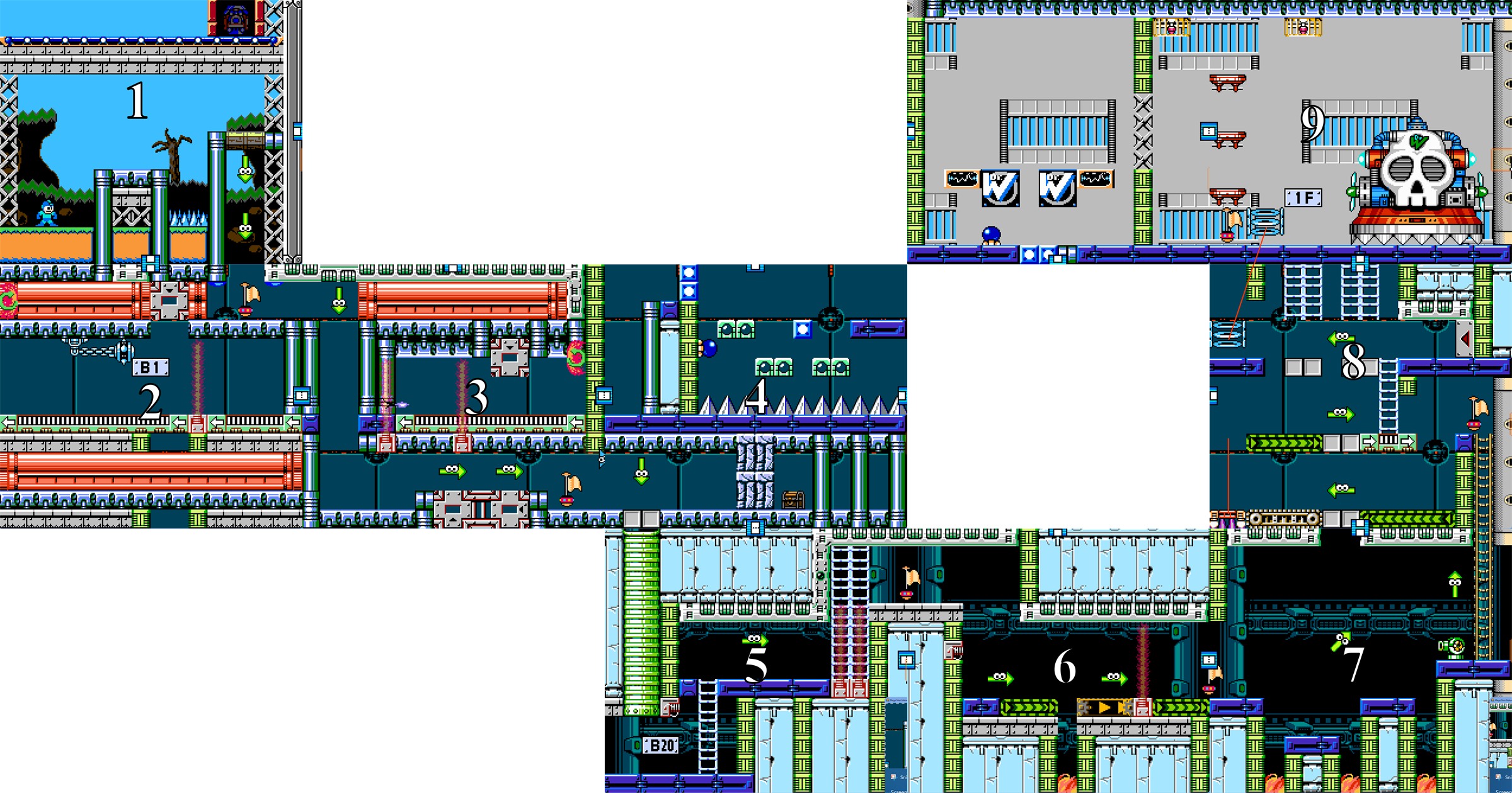
This design shows a path where Mega Man infiltrates from the ceiling and into the pipe system. Room 2 is not really used for gameplay; it is there to foreshadow a room in a later level.
Escape (Level 2)
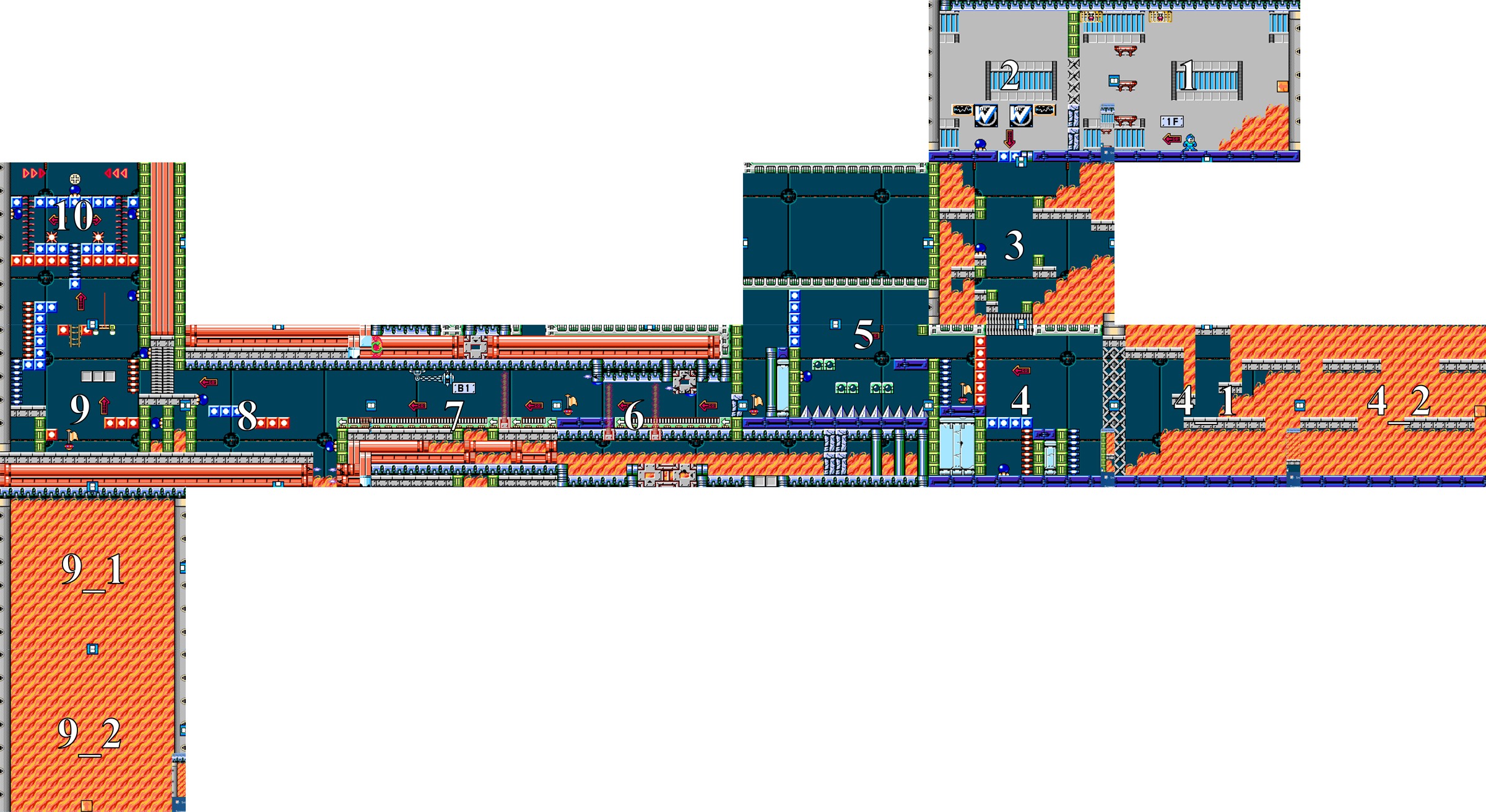
The firewall exists and is always chasing the player in this level. The extensions (Rooms 4_1, 4_2, 9_1, 9_2) give more time before the wall of fire arrives. The cadence looks repetitive, but with the puzzles and the added pressure of an incoming firewall, mechanics are kept at their basics wherever possible, and the difference is in placement.
Extraction (Level 3)

The firewall is fast and needs fast thinking from the player. It is placed in every cadence until room 6. An optional room lets the player collect a new weapon for the boss.
The hard part
The hard part was making a platformer at all. I design with form following function, with intention and a theme, and normally I excel in thinking from a top down perspective. Here I had to literally flip that perspective. Believability isn't something easily achieved, or looked for, in platformers, so I took more from Celeste's scaffolding kind of learning instead. At first I put too much in at once, so I went back and made it so players meet each new mechanic easily, then it scales up later. What I want the player to feel is that they understand the flow of the level, with each level making use of what they learnt before.
The grade
I was given full marks, a grade of 100. I was told I was very thoughtful with my design and that he really liked my cadence:
"Excellent work, as we've discussed in class, maybe the boss fight on the hard level could be designed with the core concept of the level in mind but that is a nitpick. Congratulations."
Looking back
Looking back, my weakness is the lack of experience with the genre. I seek to explore my surroundings more, play more platformers, and take notes from others to improve.
How I work
One more thing about how I work: inspiration drives my strongest work. It is powerful, but unreliable, so I built a method around it to keep moving even when the vision isn't there yet. I wrote about that in My Design Intent.